Energy flexibility
Better for each home. More useful together.
A solar roof, a battery and a hot-water cylinder can do more when they work together. Across many homes, that coordination could become useful infrastructure. The starting point is making each home work properly.
October 2026 focus · Published 22 October 2026

The route to useful home flexibility starts with supported equipment, reliable operation and customer trust. Future grid value has to be earned, measured and agreed.
The next challenge is when energy moves
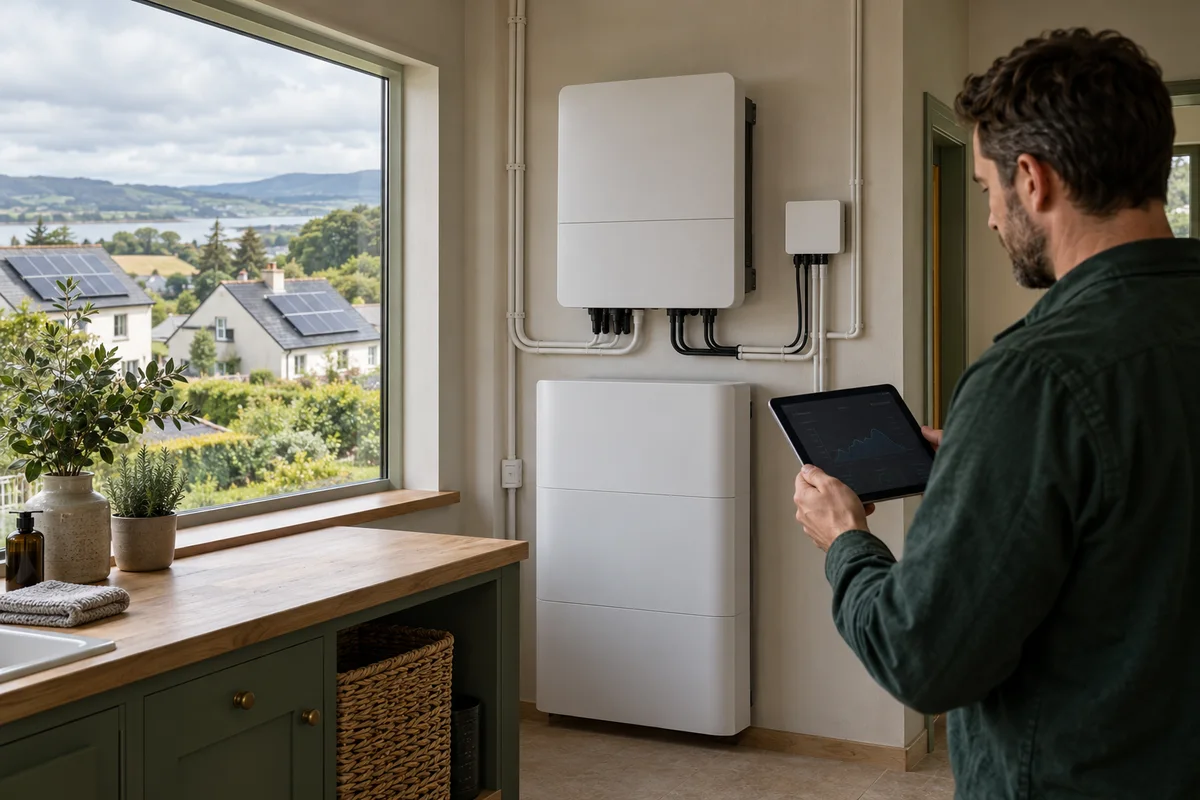
A home can have good solar panels and still buy electricity at an expensive time. Its battery may charge on an old schedule. Its immersion may switch on just before the roof starts producing. Each device can be doing exactly what it was configured to do, while the home as a whole could work better.
Installed capacity tells us what equipment can produce or store. It does not tell us whether that equipment is available, connected or doing the most useful thing at a particular moment. Timing matters to the household bill, and it matters to the electricity system around it.
For an installer, this creates an opportunity and a responsibility. The customer bought an energy outcome, not a lifetime job managing schedules. Someone needs to keep the setup aligned with the home after the installation is finished.
Ireland needs more than more generation
Ireland's national ambition is for 80% renewable electricity by 2030. More wind and solar are essential, but so are networks, storage and demand that can move to useful times. An annual target cannot describe every half-hour of operation.
In July 2026, EirGrid reported that 11.2% of available renewable generation in Ireland had been dispatched down during the first half of the year. Reasons include surplus generation, system security and local network constraints. That is not a claim that household devices could absorb all of it. It shows why producing renewable electricity and being able to use it are different challenges.
Flexible homes can be part of the response. They cannot replace grid reinforcement, and a useful action in one location may be unsuitable in another. Good coordination has to consider the network as well as the national electricity price.

Start with a home that works better
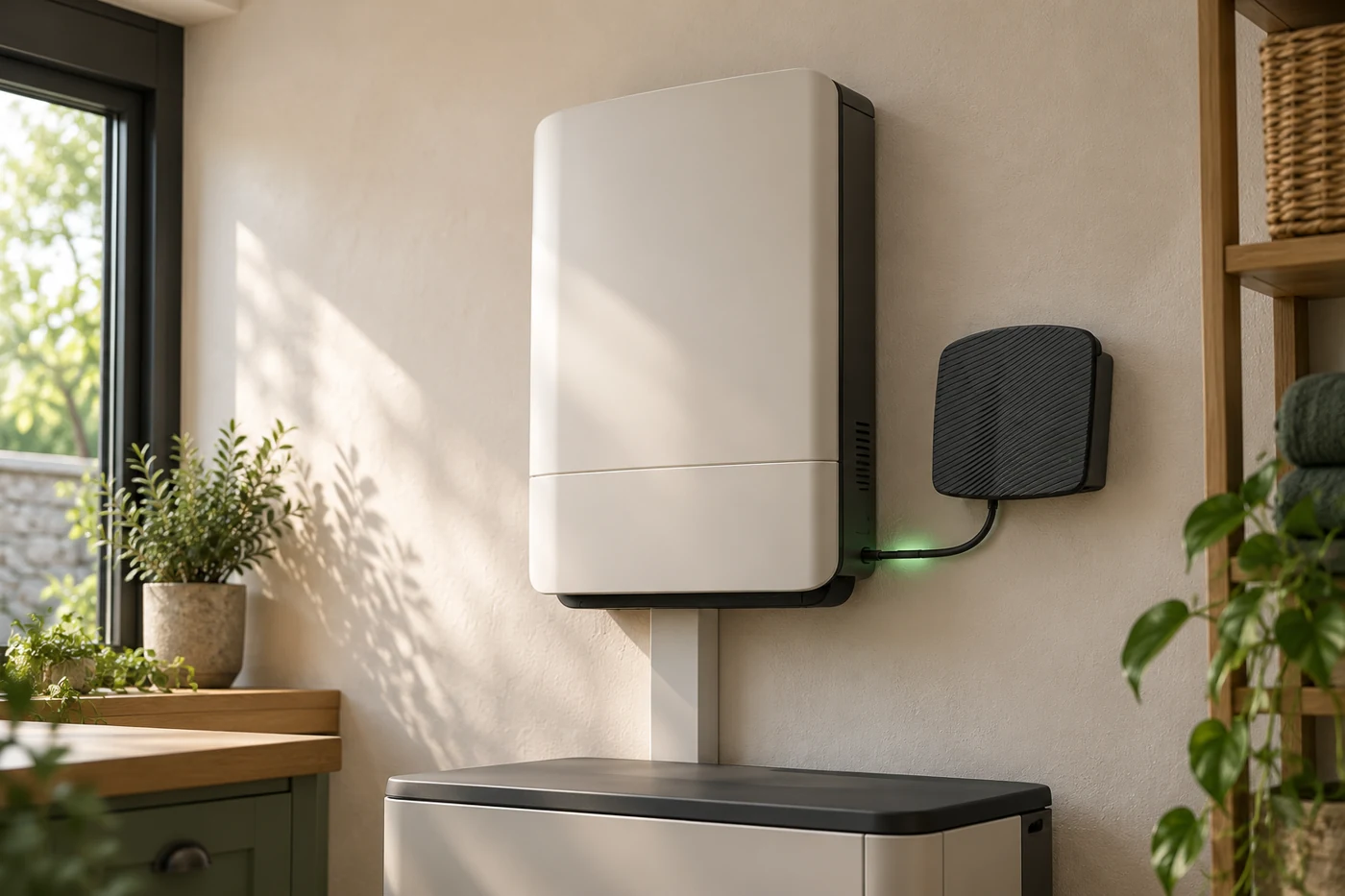
Flexibility means changing when electricity is used or stored within agreed limits. A compatible hot-water cylinder can store heat before it is needed. A battery can retain energy for a more valuable period. Supported controls can respond to the household's routine rather than relying indefinitely on a fixed timer.
The right action depends on the tariff, export payment, forecast, equipment and household needs. Putting every spare solar unit into hot water is not automatically the cheapest choice. Nor is cycling a battery more often automatically a benefit. The comparison needs to include the value of exported energy, losses and the equipment's operating limits.
The homeowner should get a simpler experience: an appropriate setup, understandable information and help when something changes. Automatic optimisation should reduce the number of decisions they have to make, while preserving useful overrides and essential safety settings.
Then make many homes useful together
A portfolio of maintained, controllable homes could offer more predictable flexibility than isolated devices. An operator can work out which homes have room to adjust, which need to be left alone and whether a requested change actually happened. That is a service requiring measurement and accountability, not simply a connection to an app.
Ireland is already developing routes for demand flexibility. ESB Networks describes participation by suitably qualified customers individually or through aggregation. Its published national ambition includes 20–30% flexible electricity demand by 2030. That is a target, not the share already achieved, and not a promise that every home qualifies for a paid service.
The broader direction is European too. In May 2024, ENTSO-E and EU DSO Entity submitted a proposed demand-response network code covering aggregation, storage and market access. That proposal illustrates the work needed around the technology; it should not be mistaken for evidence that one uniform household offer is available everywhere.
Trust is an operating requirement
Before a home participates, the customer needs a clear explanation of what can change, who is responsible and how any value is shared. Consent needs to be meaningful and revocable. Temperature requirements, reserve levels, equipment warranties and customer overrides have to be respected.
The service also needs dependable data, secure access, records of actions and a way to recover when a device disconnects. Participation depends on applicable market rules, technical qualification, commercial agreements and measurement requirements. None of those disappear because a product uses AI.
- Know which equipment is supported and who has control.
- Agree household limits, permissions and opt-out arrangements.
- Measure delivery and explain costs and benefits clearly.
- Keep an accountable support team behind the service.
What this means for an installer
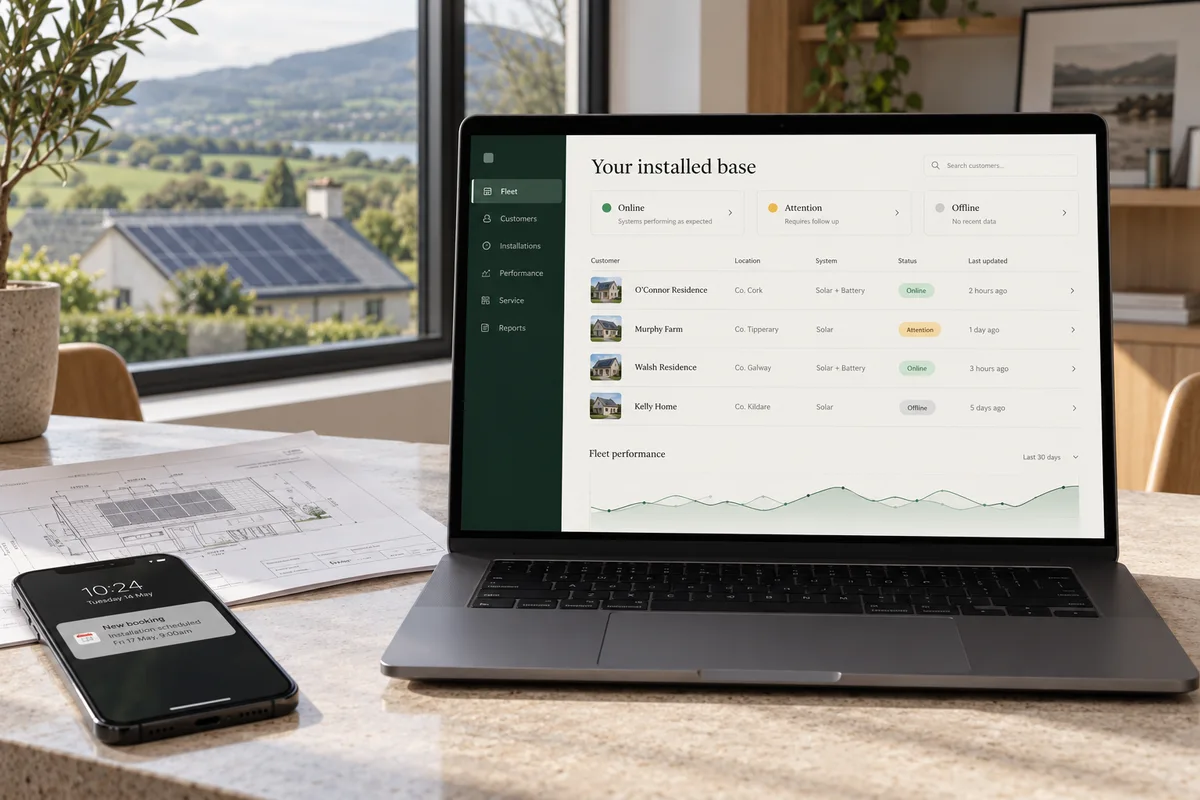
An installer should not need to build an energy trading desk or a full customer operations team to keep developing its offer. It should be able to keep the homeowner relationship while bringing in the capabilities needed to operate supported systems well.
That is the direction of Vardane: connected home energy, optimisation and ongoing support behind the installer's brand. Our Irish launch is focused on a small group of installer partners, with equipment, package and rollout agreed before homes join. Future grid participation is a separate development, dependent on the necessary agreements, eligibility and local integration. We are not presenting it as a live Vardane grid service today.
Our mission is to make distributed energy work for the people who own it, install it and depend on it. Reliable everyday operation earns the trust needed for the next step. Start by looking after each home. Build towards homes that can do more together.
Sources & context
Checked for this article on 22 October 2026. Figures retain their original reporting periods. Service availability depends on agreed scope and compatible equipment.
- EirGrid: renewable integration and dispatch down
28 July 2026. Ireland first-half 2026 renewable dispatch-down measure and reasons. Not a domestic savings estimate.
- SEAI: Renewables
National 80% renewable electricity target for 2030. Target only, not an achieved result.
- ESB Networks: Flexible demand
Definition, participation via qualification or aggregation, and national 2030 flexible-demand ambition. Does not establish Vardane eligibility.
- ENTSO-E and EU DSO Entity: demand-response network-code proposal
8 May 2024 submission. Used as historical European context, not a claim about current final legal status.
Useful to your team?
PUT THE THINKING TO WORK
More behind every installation.
Connected home energy, automatic optimisation and managed support, under your brand. Talk to us about where Vardane could help your business.
Become a Vardane installer