Installer operations
The installation ends. The customer relationship keeps going.
Every new installation adds revenue. It also adds another home that may need an explanation, a settings change or help when something stops working. Growth becomes easier when that second responsibility has a clear owner.
August 2026 focus · Published 22 October 2026
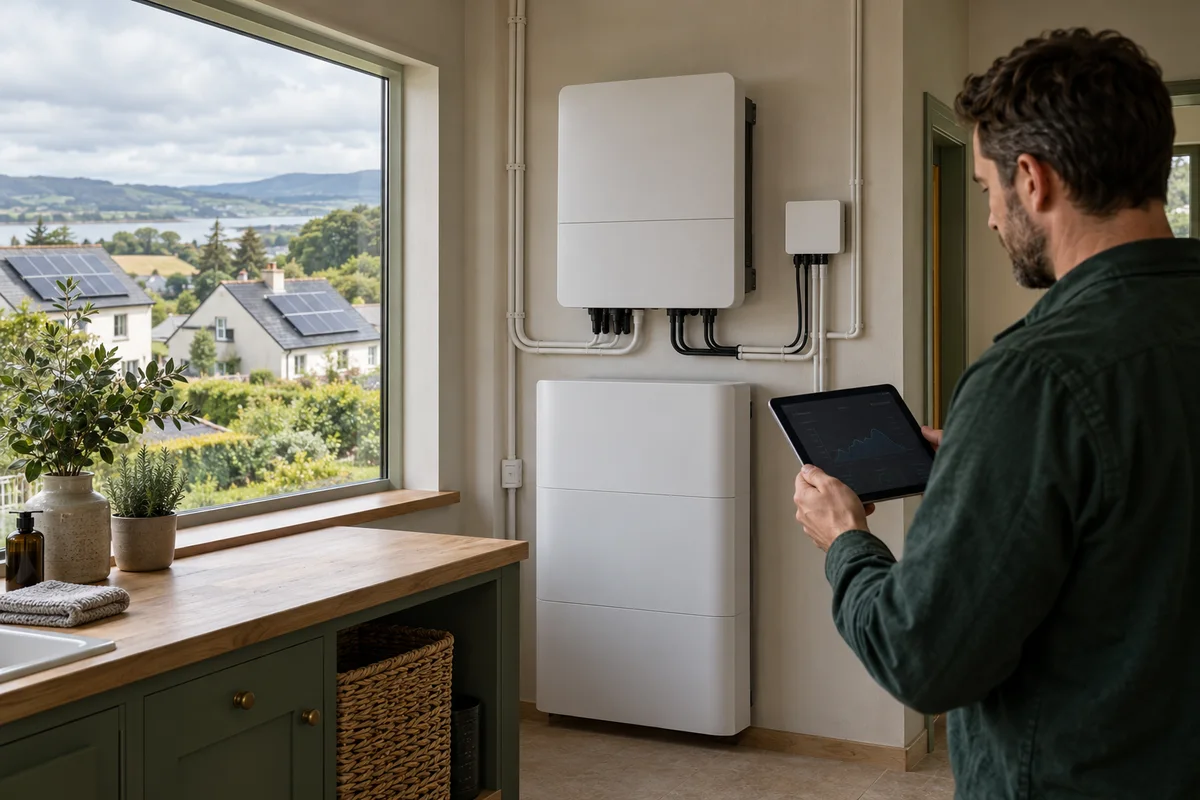
A growing installation business needs a repeatable service operation: one record, one owner and a clear route from a homeowner enquiry to the right technical response.
Your installed base keeps growing, even when your team does not.
The crew has finished, the system is commissioned and the homeowner has the app. For an installation business, that should mean a completed job. For the customer, it is the beginning of living with a new energy system.
A few months later, they change broadband provider. Their battery behaves differently after a tariff change. They see lower generation in November and wonder whether something has failed. They contact the company whose name is on the quotation. That is a reasonable place to start. It does not mean every enquiry needs an electrician.
Irish deployment gives this a growing backdrop. ESB reported in April 2026 that ESB Networks processed more than 47,000 microgeneration installations during 2025. That figure covers network microgeneration, rather than a count of domestic solar jobs or support incidents. It shows the scale of new connected equipment, not how often it needs attention.
The operational question is simple: as more homes join your customer base, who looks after the everyday work that follows?
The difficult part is often the work between the technical jobs.
A support request rarely arrives with a complete diagnosis. A homeowner might say that the battery is not charging. Before booking a visit, someone needs to establish whether there is fresh data, what the settings are, whether the system has an error and what changed recently.
Then comes the coordination. Who has the equipment details? Has the manufacturer already been contacted? Is a part covered by its warranty? Does the customer know what happens next? A small technical task can generate several calls when the information is scattered.
This work matters even when nothing is broken. People need help understanding seasonal output, new tariffs and the difference between energy generated, energy used at home and energy exported. A clear explanation can close an enquiry. Silence can turn uncertainty into a complaint.

A smarter system needs a service around it.
By 4 September 2025, ESB Networks reported more than two million smart meters installed in homes, farms and businesses across Ireland. More households can access detailed usage information and choose tariffs around when they use electricity. That makes the relationship between the home, its equipment and its energy bill more important.
A smart inverter may already offer schedules, monitoring and battery controls. Those features are useful. They still leave someone responsible for checking the information, interpreting an issue, helping the homeowner and following through until a case is closed.
Adding another portal does not automatically create that service. A dashboard is a tool. A service needs an owner, a response process and a reliable handover to a qualified technician when physical work is required.
Separate the work before you send the van.
A useful first step is to sort enquiries by the kind of response they need. This avoids making every customer call compete for the same person’s attention. It also protects technician time for work that genuinely needs a visit.
- Explain: help the homeowner understand normal operation, energy flows or an app reading.
- Restore: investigate lost monitoring, permissions or supported settings, with safe remote guidance where appropriate.
- Coordinate: gather evidence, follow up a manufacturer case and keep the customer informed.
- Attend: send a qualified technician when inspection, electrical work or a physical repair is needed.
Give the next person a complete picture.
For each home, keep one usable service record: equipment models, commissioning information, relevant photographs, access permissions, agreed support scope and the history of what has already been tried. Record the outcome, not just that somebody made a call.
When a visit is needed, the technician should receive the reason for attending, the findings so far, useful equipment information and the expected next step. The homeowner should know who is coming and when. That is a better starting point than asking the person in the van to reconstruct the enquiry on arrival.
This is also why a good handover matters. It gives ongoing care a reliable foundation. It should make the installer’s work easier to support, with commissioning and qualified electrical responsibilities remaining clear.
Measure the interruption, then improve the process.
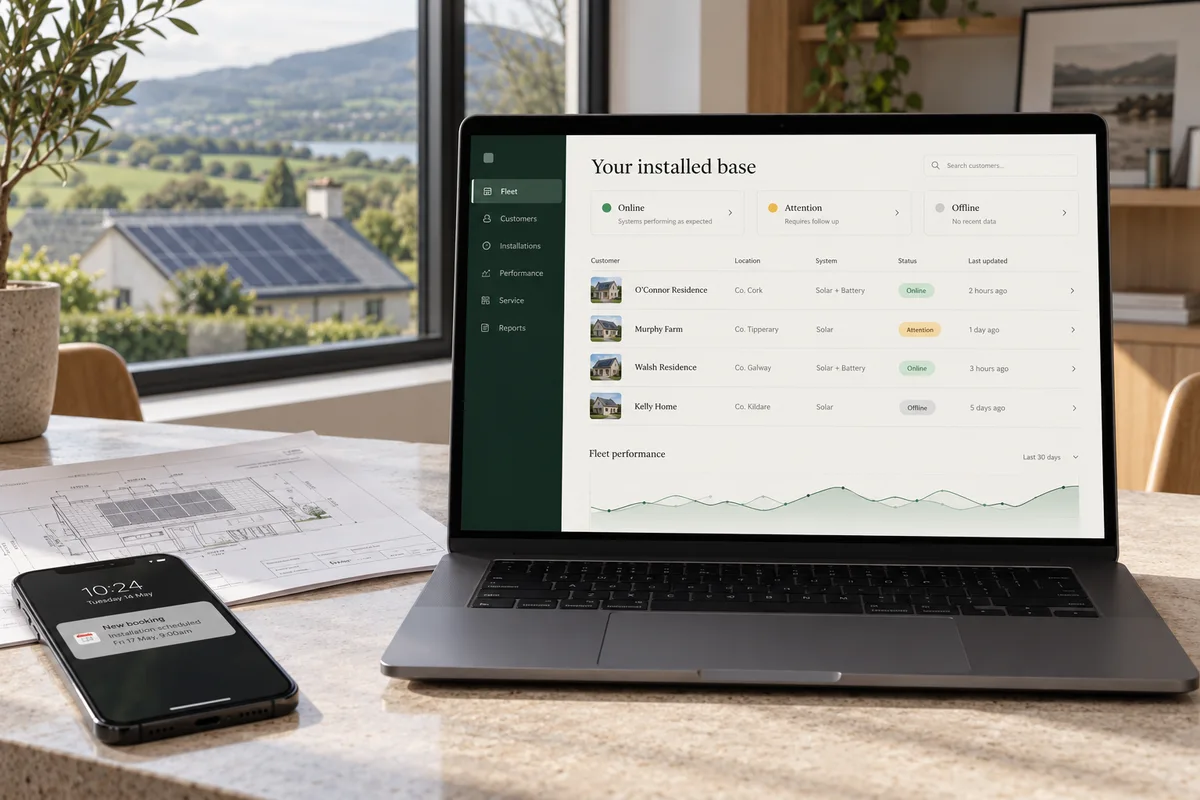
You do not need a large transformation project to find the gaps. Review a month of recent enquiries. Count how many concerned explanations, connectivity, settings, warranty coordination or physical faults. Note how many times a customer repeated themselves and how much information was available before a visit.
Track time to first response, time to resolution and repeat contact for the same issue. Compare like-for-like cases. A headline remote-resolution percentage means little without knowing the fault mix and whether the customer’s problem stayed resolved.
The result should help you decide what your team should own, what can be standardised and what is better handled by a managed service. It is a practical business decision about capacity and customer confidence.
Keep the relationship. Put an operation behind it.
Vardane brings connected home energy, supported optimisation and managed customer operations together under the installer’s brand. Start with a conversation about where that service could help your business.
The aim is tangible: homeowners have a clear place to get help, everyday enquiries have an owner and technicians receive a useful brief when their skills are needed. Equipment compatibility, service responsibilities and rollout terms are agreed before homes are enrolled.
If your installed base is growing faster than your ability to look after it, see how the Vardane installer service is structured and discuss whether the launch is a fit for your business.
Sources & context
Checked for this article on 22 October 2026. Figures retain their original reporting periods. Service availability depends on agreed scope and compatible equipment.
- ESB: Record investment in energy infrastructure, 2 April 2026
Primary source for more than 47,000 microgeneration installations processed in 2025. Not a domestic-only figure or evidence of support demand.
- ESB Networks: Two million smart meters, 4 September 2025
Primary source for smart meters installed across homes, farms and businesses. Historic milestone, not an October 2026 total.
Useful to your team?
PUT THE THINKING TO WORK
More behind every installation.
Connected home energy, automatic optimisation and managed support, under your brand. Talk to us about where Vardane could help your business.
Become a Vardane installer